By Robert Kibet
Teen pressure test: Chepchirchir (17) and Jepngetich (18) carry Kenya’s hopes into Ethiopia-led 1500m battle
Kenya’s challenge in the women’s 1500m at the Rabat Diamond League rests unusually on teenage shoulders, with 17-year-old Caren Chepchirchir and 18-year-old Nancy Jepngetich stepping into a senior global field dominated by sub-4-minute experience and Ethiopian depth.
It is a rare competitive scenario: Kenya’s primary representation in one of the sport’s most demanding middle-distance events is being carried not by established senior elites, but by two athletes still in the early stages of their international careers. The tactical and psychological weight of that shift defines Kenya’s storyline in Rabat.
Ethiopia sets the performance ceiling
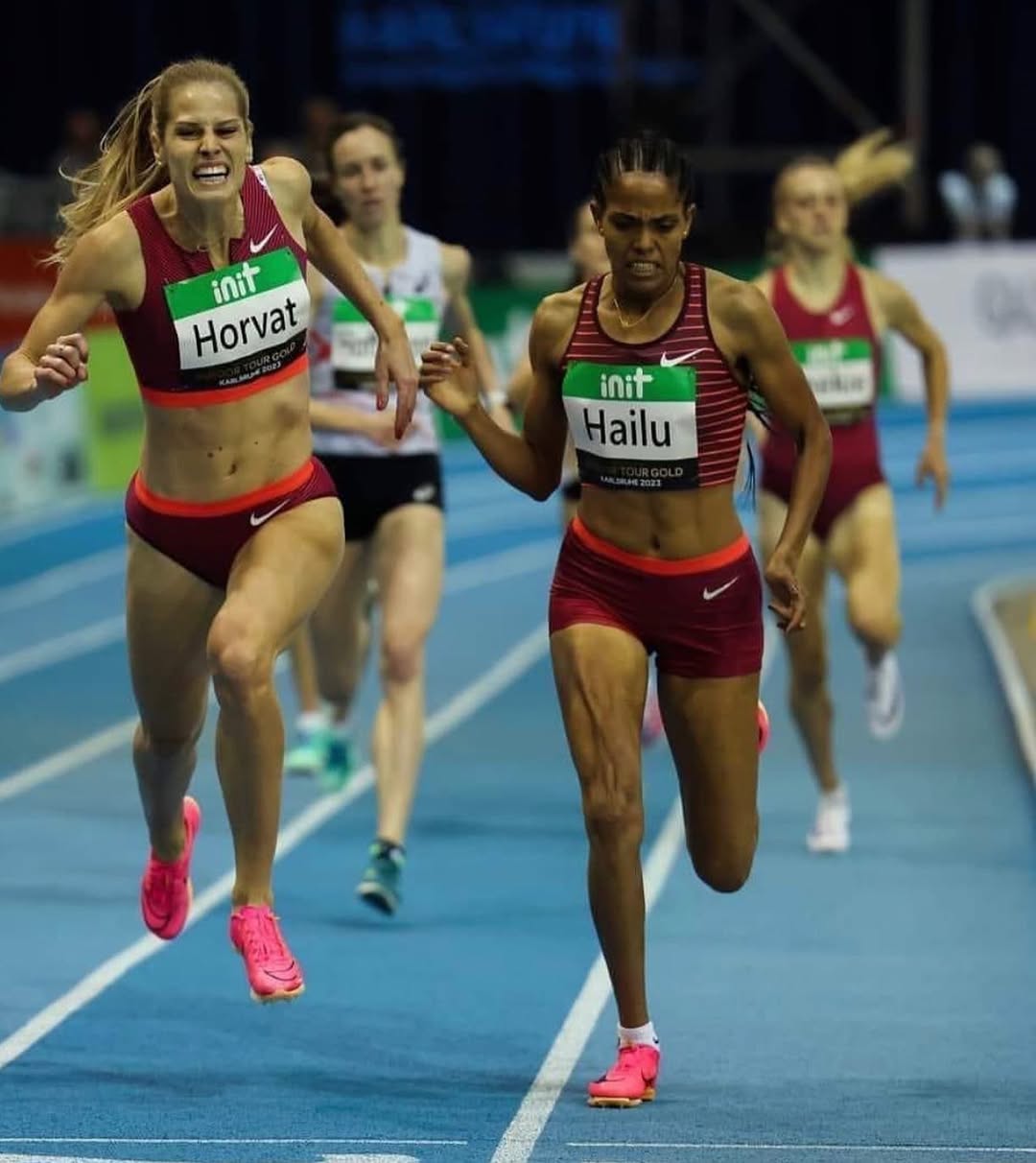
At the top of the field sits Freweyni Hailu of Ethiopia, whose 3:54.16 personal best makes her the fastest entrant and the central reference point for race control. Her presence alone establishes Ethiopia as the likely pace-setter, with the ability to dictate whether the race becomes a sustained burn or a controlled tactical progression.
Behind her, Ethiopia’s depth reinforces that advantage. Athletes such as Likina Amebaw (4:00.14), Aster Areri (4:04.82), Yordanos Tsegab (4:04.84), and Samrawit Mulugeta (4:07.54) provide multiple layers of tactical flexibility—allowing Ethiopia to either push a strong tempo from the front or destabilize the pack through controlled surges.
In either scenario, the race structure is likely to stretch early, forcing younger athletes like Kenya’s duo into rapid decision-making under pressure.
Experience versus emergence: Muir factor
Laura Muir of Great Britain remains the most experienced competitor in the field, holding a 3:53.37 personal best. While her recent form line is less dominant than previous seasons, her racing intelligence and ability to execute under championship-style pressure remain key variables.
Muir’s presence complicates Ethiopia’s dominance. In tactical scenarios, she becomes a danger in the final 600m, particularly if the pace drops after an aggressive opening kilometre.
European middle pack adds density
Agathe Guillemot (France, 3:56.69), Salomé Afonso (Portugal, 3:59.32), and Lucia Stafford (Canada, 4:02.03) form a competitive sub-4 group capable of staying attached if the race is evenly paced.
Their positioning will be critical in determining whether the race fragments early or remains compressed into a final-lap sprint.
Kenya’s teenage responsibility
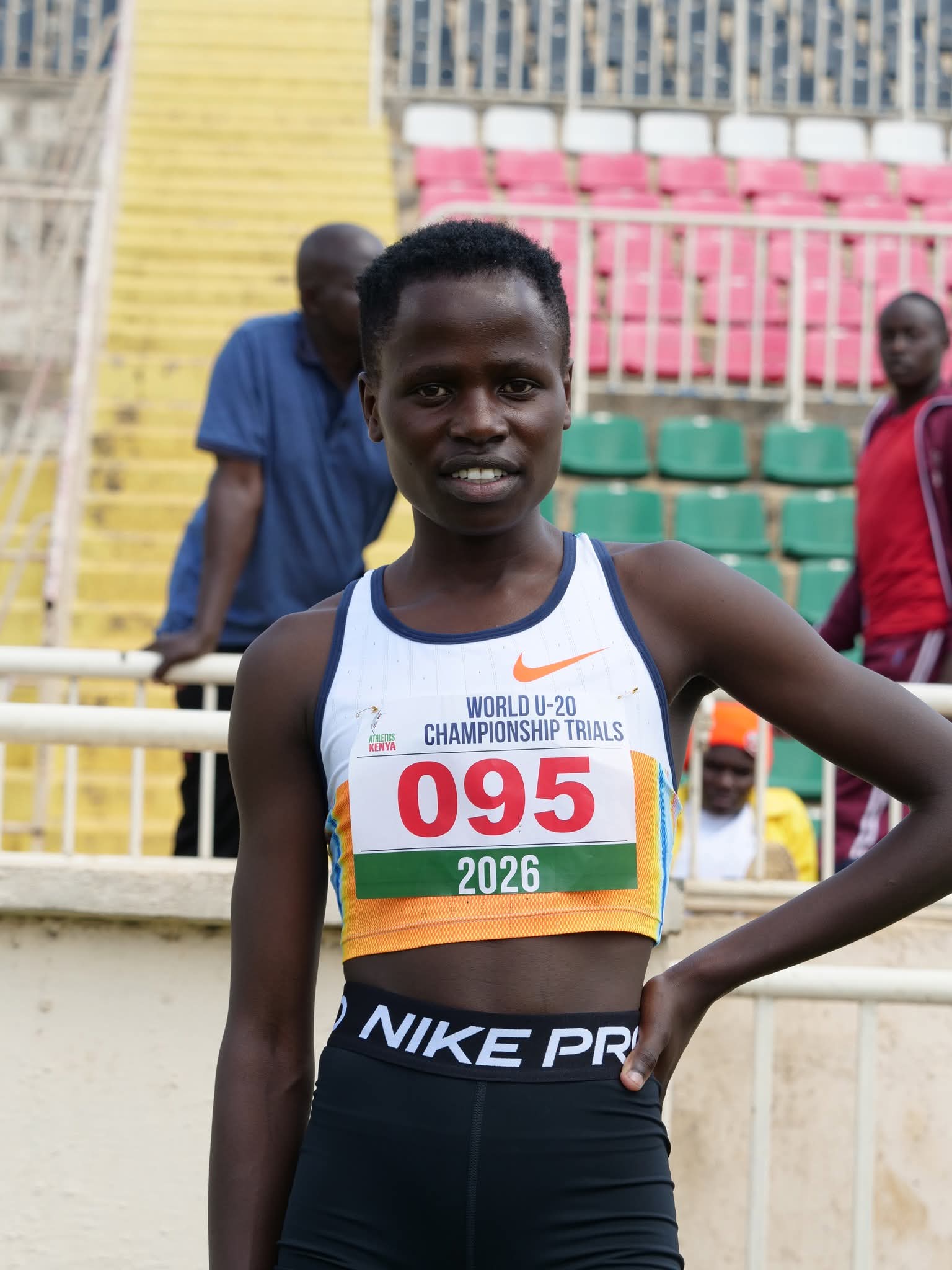
For Kenya, the contrast is stark. Chepchirchir (17) and Jepngetich (18) arrive with personal bests in the 4:07 range, placing them outside the core sub-4 elite bracket on paper. Yet their selection into a Diamond League field of this depth signals long-term development investment—and immediate exposure to elite racing demands.
Their challenge is not simply physical; it is structural:
- Responding to Ethiopian-controlled pace shifts
- Maintaining contact through the first 800–1000m
- Avoiding early separation in a race likely to stretch under sub-4 rhythm
In a field where most athletes have years of senior global racing experience, Kenya’s reliance on teenagers introduces both risk and opportunity. The risk is obvious—pace mismatch and positioning losses. The opportunity lies in exposure to high-intensity racing that accelerates development under pressure.
Tactical outlook: survival before strategy
The most likely race pattern is Ethiopian-controlled acceleration early, followed by a compression phase where Muir, Guillemot, and Stafford position for the final lap.
For Kenya, success will not be defined by medals alone but by race execution metrics:
- Staying within striking distance at 800m
- Avoiding significant gaps at 1200m
- Executing a disciplined final 300m finish despite fatigue
Final reading
Rabat’s women’s 1500m becomes more than a standard Diamond League contest. It is a generational contrast: Ethiopia’s established sub-4 structure, Europe’s tactical experience, and Kenya’s teenage transition phase converging in a single race.
For Chepchirchir and Jepngetich, the outcome is less about immediate dominance and more about how they absorb one of the highest levels of competitive intensity in global middle-distance running.