Kenyan teenager destroys the field in Eugene with a championship-record 7:28.28 and sets his sights on LA 2028
By Robert Kibet
Kiprono turns the final into a time trial
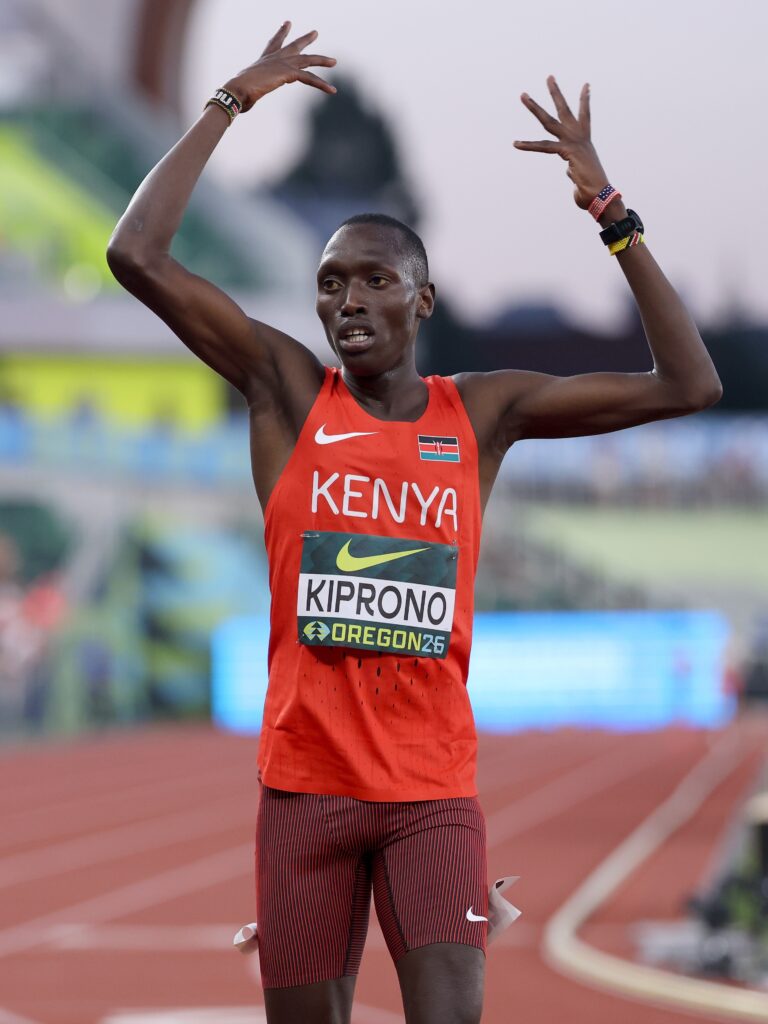
EUGENE, Oregon, Aug 8 2026—Seventeen-year-old Emmanuel Kiprono came within 0.09 seconds of the world under-20 3000m record on Friday night, producing a remarkable display of front-running to win gold at the World Athletics U20 Championships in Eugene.
The Kenyan clocked 7:28.28, breaking the championship record and moving to within a fraction of Yomif Kejelcha’s world U20 record of 7:28.19.
There was no pacemaker to follow, no rival sharing the workload and, for much of the race, barely anyone within sight.
“He did it all on his own,” the commentators observed afterwards. “It was brave, it was bold, and it was a privilege to witness.”
From disappointment to gold
The performance also completed a remarkable turnaround for Kiprono.
Earlier this year, he had been disappointed after taking silver at the World Cross Country Championships. The defeat became motivation rather than a setback.
“When he came for the world cross country, he wanted to win and when he got the silver medal, that really annoyed him because he wanted a gold medal,” Kiprono said after his victory.
“He went back to training, did well, and got a chance to represent Kenya at the world championships.”
That renewed preparation culminated in Eugene.
Kenya takes control
The race began relatively cautiously, with the first 200m recorded in 30.38 seconds, Charles Barrett initially occupying the front.
Kiprono soon changed the complexion of the final.
He reached 400m in 1:01.96, then accelerated through 800m in 1:57.78.
By 1,000m he was through in 2:26.52.
That split was the first unmistakable indication that this would not be a conventional tactical championship race.
Kiprono was running at a pace capable of threatening Kejelcha’s world U20 record, and the field was already beginning to fracture behind him.
He reached 1,200m in 2:55.16 and 1,500m in 3:39.70, maintaining an extraordinary rhythm while the chasing athletes struggled to respond.
The gap becomes a chasm
At 2,000m, Kiprono stopped the clock at 4:55.43.
The field behind him was no longer racing for victory. It was racing for the remaining medals.
He continued to stretch the advantage, passing 2,400m in 5:57.53 and 2,800m in 6:59.73.
By then the world record was firmly in sight.
At 2,900m he was through in 7:14.56, leaving the final 100m as a desperate chase against the clock.
The commentators began calculating whether Kiprono could produce the closing speed required.
Then came the final push.He crossed the line in 7:28.28.The world record survived by nine hundredths of a second.
But the championship record was his.
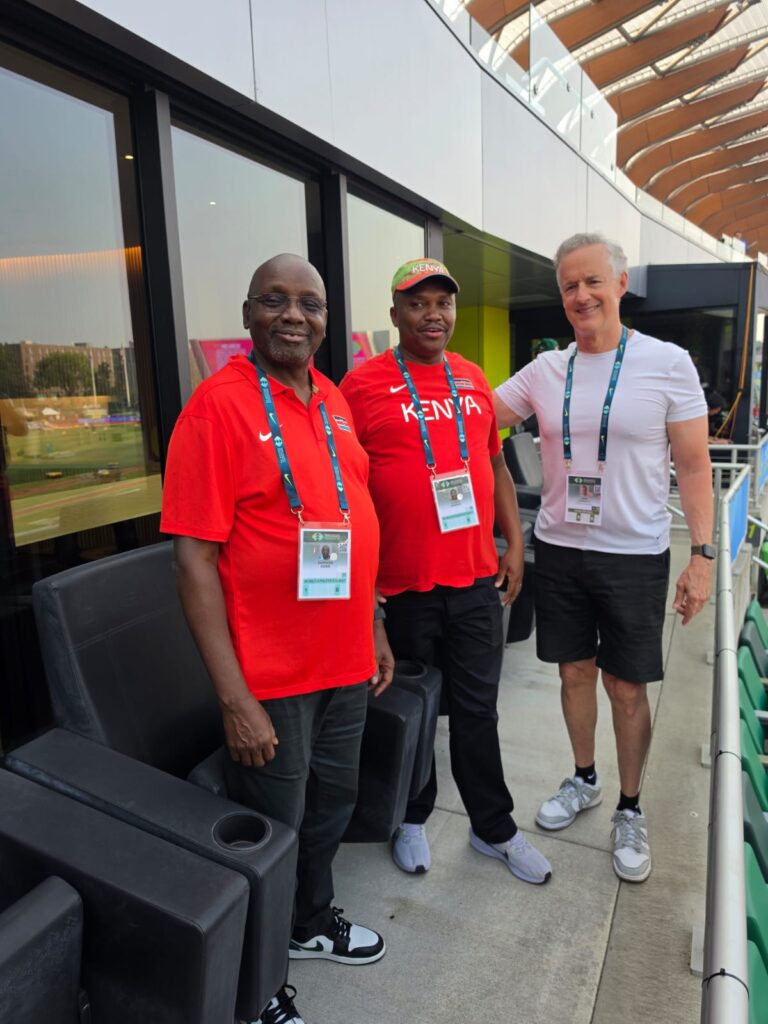
The audacity of the performance drew comparisons with one of Kenya’s most celebrated distance-running eras. Barnaba Korir, Athletics Kenya’s Youth Development Director and First Vice-President of the National Olympic Committee of Kenya, said Kiprono’s approach reminded him of Daniel Komen’s record-breaking days.
“The 3000m reminded me of Daniel Komen when he broke the world record. For a young man to have the courage to run from the gun to the tape was spectacular, and one of the greatest runs by a U20 athlete ever.”
For Korir, the significance lay not simply in the time but in the courage required to take control of a world final from the opening stages and sustain the challenge alone.
Abraham turns silver into the target
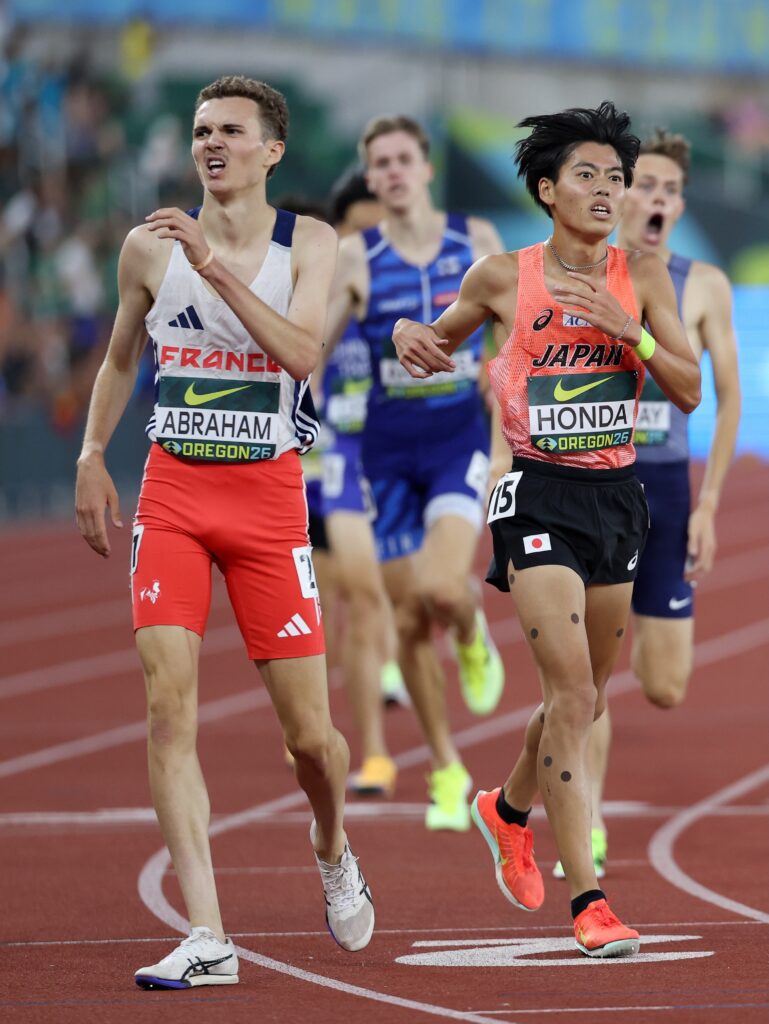
Behind Kiprono, France’s Alois Abraham recognised early that the Kenyan had taken the gold-medal battle out of reach.
“I knew I was out for a medal,” Abraham said. “The Kenyan was so far ahead I knew that I could compete for the silver.”
The Frenchman did exactly that, finishing second in 7:47.79.
Abraham, whose family arrived in Eugene on the day of the final, was also keen to celebrate the achievement as part of a wider French team success.
“We get along very well, we have a motivated team,” he said. “I am proud of my teammates’ accomplishments and I am happy to add another medal for Team France.”
He planned to celebrate first with his teammates before reuniting with his family.
Honda takes bronze as field chases
Japan’s Ojiro Honda claimed bronze in 7:48.49, setting a national U20 record.
Honda admitted the pace had made it difficult to remain with the groups as the race unfolded.
“It was very difficult to follow the groups and keep up with the pace,” he said. “The groups move around, so it was a very good competition for me.”
He eventually found his position, followed his teammate and produced the effort required over the final lap.
Behind the medals, the times kept falling.
Britain’s Liam Conway ran a 7:50.10 personal best, Finland’s Aleksi Ahlfors clocked 7:50.56, while Chinese Taipei’s Tzu-Chieh Chien set a national U20 record of 7:51.18.
Belgium’s Ilyes Druez and Sweden’s Sebastian Lörstad also recorded personal bests.
Kenya’s Edwin Elkana, who had initially attempted to stay with Kiprono, finished ninth in 7:51.94, a personal best.
Remarkably, nine of the top 10 either recorded personal bests or national U20 records.
The record survives – for now
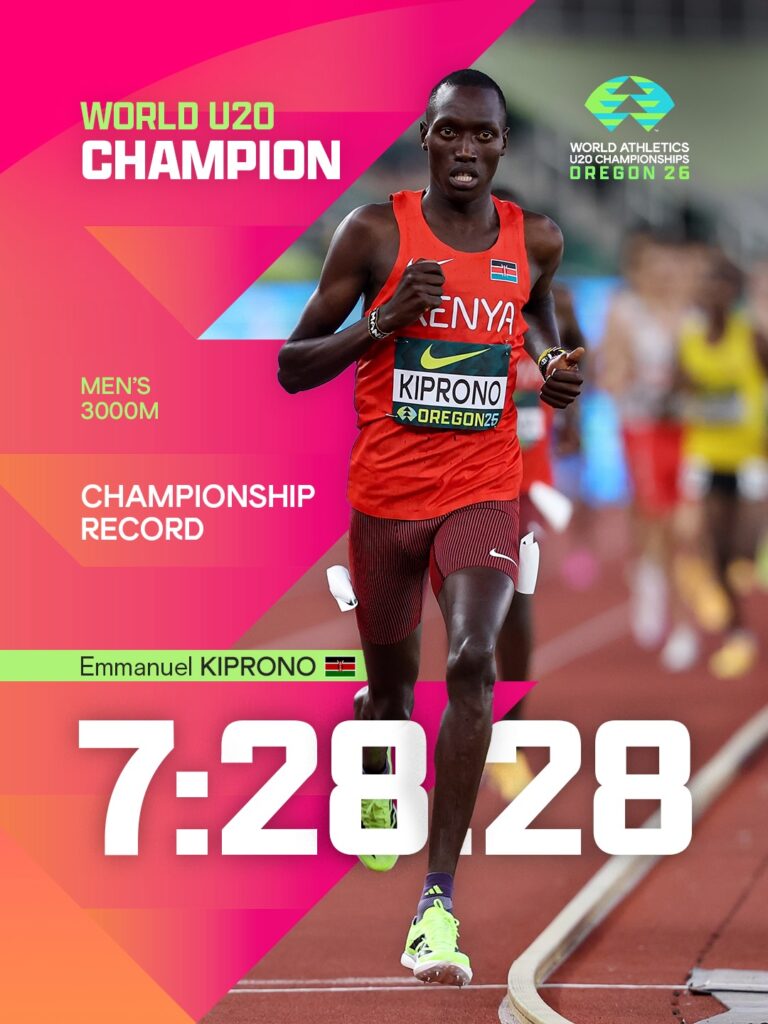
Kiprono’s run ultimately became a race against history.
At 2,800m he was still threatening Kejelcha’s world U20 record. At 2,900m he was closer still.
But the final 100m proved just enough to leave the mark intact.
The championship record, however, belonged to him.
And Kiprono is already looking beyond Eugene.
He said he woke on race morning feeling good and knew that “something special was coming”. His next major ambition is already clear: to train and prepare for the 2028 Olympics.
For Kenya, the significance extends beyond one gold medal.
A teenager has just taken a world junior final apart from the front, come within nine hundredths of a global record and announced himself as a potential future senior championship contender.
The world record survived in Eugene. Kiprono, however, has given it a warning.
MEN’S 3000M FINAL — TOP 10
| Pos | Athlete | Country | Time | Mark |
|---|---|---|---|---|
| 🥇 1 | Emmanuel Kiprono | 🇰🇪 KEN | 7:28.28 | CR |
| 🥈 2 | Alois Abraham | 🇫🇷 FRA | 7:47.79 | |
| 🥉 3 | Ojiro Honda | 🇯🇵 JPN | 7:48.49 | NU20R |
| 4 | Liam Conway | 🇬🇧 GBR | 7:50.10 | PB |
| 5 | Aleksi Ahlfors | 🇫🇮 FIN | 7:50.56 | PB |
| 6 | Tzu-Chieh Chien | 🇹🇼 TPE | 7:51.18 | NU20R |
| 7 | Ilyes Druez | 🇧🇪 BEL | 7:51.67 | PB |
| 8 | Sebastian Lörstad | 🇸🇪 SWE | 7:51.94 | PB |
| 9 | Edwin Elkana | 🇰🇪 KEN | 7:51.94 | PB |
| 10 | Owen Powell | 🇺🇸 USA | 7:53.35 | PB |
CR: Championship Record · NU20R: National U20 Record · PB: Personal Best
Kenya: 🥇 Emmanuel Kiprono — 7:28.28 CR; 9th Edwin Elkana — 7:51.94 PB.