Kenya tops the athletics medal table as young athletes from across Zone V turn Nairobi into a testing ground for the road to Dakar
By Robert Kibet
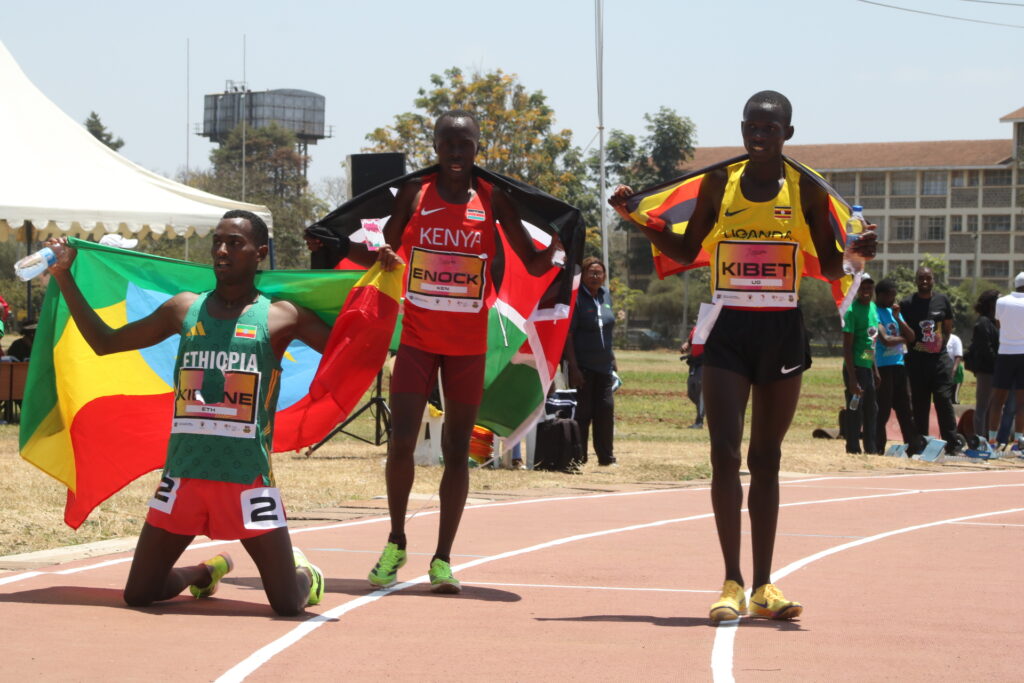
NAIROBI, Kenya,Aug 28 2026 — The Kenyan flag was raised and the national anthem played at the Kenyatta University Amphitheatre after another day of athletics success.
For the young athletes competing at the ANOCA Zone V Youth Games, it was a reminder that medals at this level carry meaning beyond the podium.
They represent a country, a pathway and, potentially, the beginning of a journey towards the global stage.
Over two days of athletics, Kenya emerged as the leading nation with seven gold, four silver and one bronze medal. Ethiopia and Uganda provided the strongest challenge, while South Sudan, Rwanda, Burundi, Somalia and the Refugee Team also featured among the medalists.
The competition brought more than 300 young athletes together across the Games, providing a demanding regional test ahead of the Youth Olympic Games in Dakar and other international competitions.
Donald Rukare, president of ANOCA Zone V, said the value of the Games extended beyond the results.
“Having over 300 athletes taking part in a tough competition prepares them for the upcoming Youth Olympics and other global competitions,” Rukare said.
“These Games are important because they act as a pathway, an incubation, and we look forward to working with our National Olympic Committees in the ANOCA Zone V region.”
Chepkwech arrives with momentum
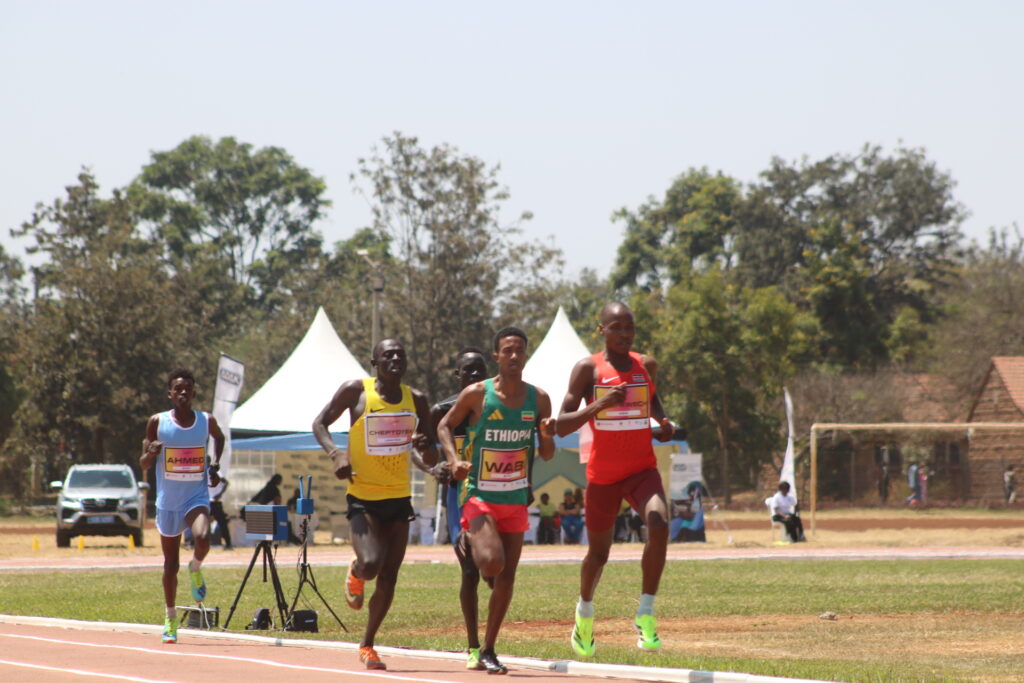
Kenya’s Wilson Chepkwech set the tone on the opening day.
Fresh from winning 1500m gold at the World Athletics Under-20 Championships in Oregon and another title at the FEASSA East Africa School Games in Morogoro, Tanzania, Chepkwech added ANOCA gold to his growing collection.
He ran 3:46.81 to beat Ethiopia’s Wabi Wejra Seblega, who took silver in 3:52.83, while Uganda’s Cheptoek Timothy won bronze in 4:00.04.
“The winning at ANOCA means a lot to me,” Chepkwech said. “I have trained enough and will refine more as I target a good time.”
The weather, he added, had been difficult.
“It was too harsh but we had to fight.”
His attention has already shifted to improvement. Chepkwech wants his coach to introduce more slope training at camp as he works on developing the speed required for the 1500m.
Luanda provides the backdrop
The battles in Nairobi came less than a year after the African Youth Games in Luanda, Angola, where the same regional powers were also prominent in athletics.
Kenya won the boys’ 1500m through David Kapaiko and the girls’ 2000m steeplechase through Caren Chepngeno. Wesley Kiplagat took silver in the boys’ 3000m, while Lonah Cherono won silver in the girls’ 3000m.
Ethiopia also demonstrated its depth, with Hika Regassa winning the boys’ 800m and Goytom Mekonen Kidane taking bronze in the boys’ 3000m.
Nairobi therefore became another test of the development of East Africa’s young runners.
Chasala turns disappointment into gold
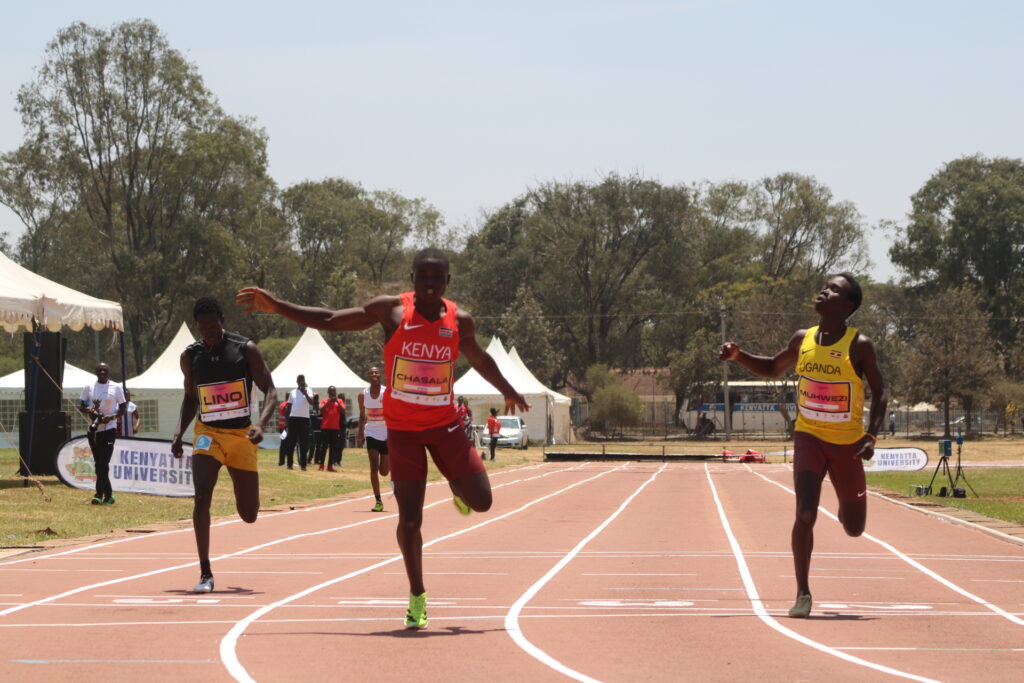
Bramwel Chasala supplied another Kenyan highlight, winning the boys’ 200m in 22.43 seconds.
Uganda’s Muhwezi Abraham Lincoln took silver in 22.66, while South Sudan’s Faisal Alafi Lino won bronze in 22.98.
Chasala’s victory carried its own story of persistence.
He had competed at Kenya’s trials for the Under-20 World Championships in Oregon but failed to make the qualifying time.
That disappointment did not end his ambition.
“I am happy to have won, and if I am made to be in Team Kenya to Dakar, I promise to deliver,” Chasala said.
His immediate goal is Dakar. His longer-term ambition is to keep improving and earn his place among Kenya’s next generation of international sprinters.
Ethiopia and Uganda refuse to yield
Kenya did not have the track to itself.
Ethiopia’s Nesanet Selmon won the girls’ 800m in 2:07.01, ahead of Kenya’s Winnie Jepchumba, while Yordanos Tsigab Berha won the girls’ 3000m in 9:36.64.
Uganda’s Chelimo Keren finished second in that race in 9:41.72, with Kenya’s Tabitha Wanjiru Mwaniki taking bronze in 9:42.30.
In the girls’ 5000m walk, Ethiopia’s Neima Nuredin Juhar won gold in 27:18.41, with Kenya’s Cecilia Njeri taking silver in a two-athlete contest.
The results reinforced a familiar pattern.
Kenya, Ethiopia and Uganda may have different development systems, but their young distance runners are already meeting on the same stages and pushing one another.
Tuitoek embraces the rivalry
The second day produced another close East African distance battle.
Kenya’s Enock Tuitoek won the boys’ 3000m in 8:01.67, with Ethiopia’s Goytom Mekonen Kidane just 2.12 seconds behind in 8:03.79.
Uganda’s Kibet Michael took bronze in 8:11.46.
For Tuitoek, the presence of Ethiopia and Uganda made the challenge even more meaningful.
“It is my coach’s motivation that pushed me, especially running against competitors from Ethiopia and Uganda,” he said.
The race was a small-scale version of one of African athletics’ most enduring rivalries — and potentially an early meeting between athletes who could cross paths again at senior level.
Uganda produces a sprint statement
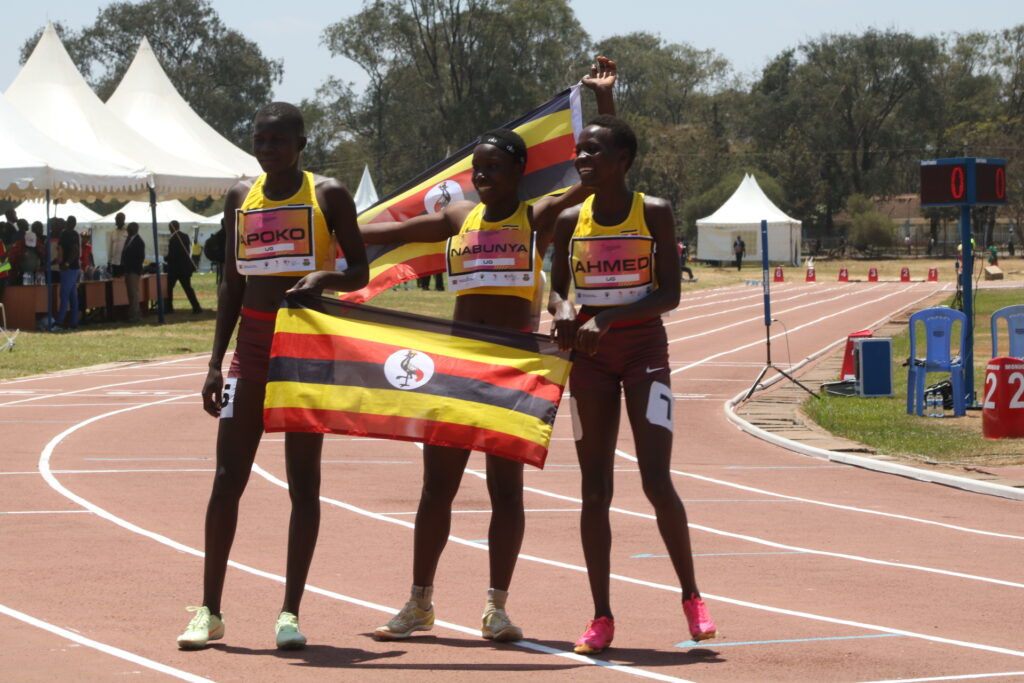
Uganda made its own emphatic mark on the second day by sweeping the girls’ 200m.
Nabunya Tracy won gold in 24.94, Marufa Ahmed Dafala took silver in 25.12 and Apoko Mary completed the podium in 25.31.
Uganda also took the boys’ 400m through Ogenrwot Daniel, who clocked 49.17. Kenya’s Peter Mwaura finished second in 50.27.
Ethiopia later won the girls’ 1500m through Elsabet Amare Tilahun in 4:38.17, with Kenya’s Millicent Jepkonga taking silver in 4:39.73 and Uganda’s Cherotwo Baskaline bronze in 4:44.49.
Kenya finishes with four more golds
Kenya responded strongly in the final events.
Purity Munyalo completed a field-event double, adding triple-jump gold with 12.66m after winning the long jump on the opening day.
David Kapaiko, who had won the boys’ 1500m at Luanda, added another youth title by winning the boys’ 800m in 1:52.55.
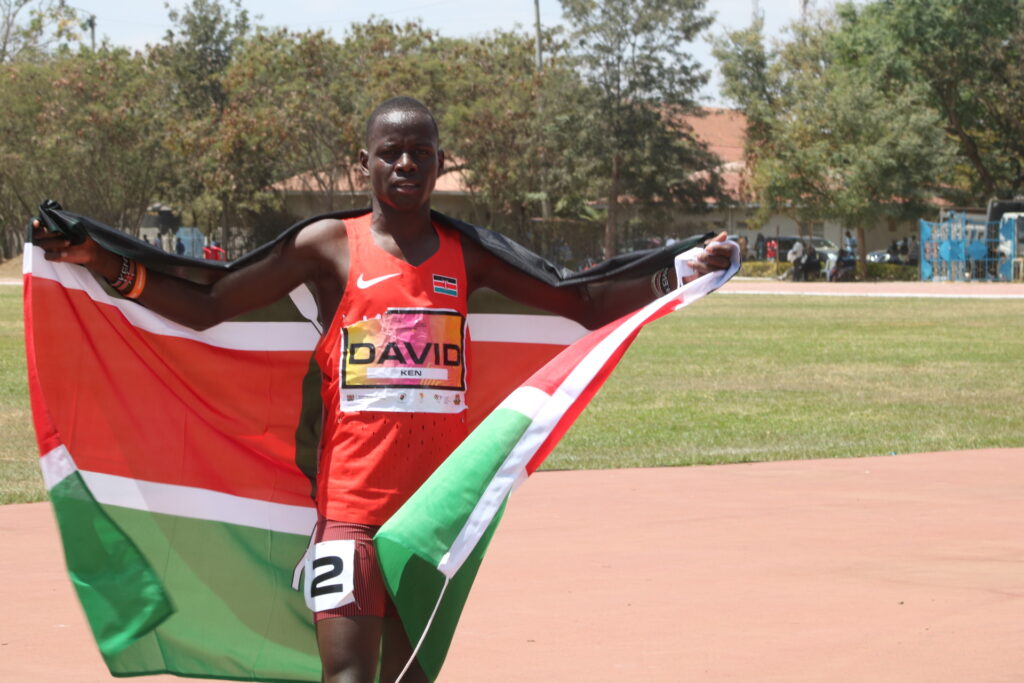
Anthony Lemoshira then delivered Kenya’s final gold of the athletics programme, winning the boys’ 100m in 10.73.
South Sudan’s Lul Tut Jundit took silver in 10.88 and Uganda’s Muhwezi Abraham Lincoln bronze in 11.01.
For Kenya, the second day alone produced four gold and two silver medals.
More than medals
The numbers tell one story.
Kenya’s seven gold, four silver and one bronze show a strong performance on home soil.
But the significance of the ANOCA Games goes beyond the medal table.
For Rukare, the ANOCA Zone V Youth Games President,the competition is part of a wider development pathway.

The Games allow young athletes to experience international competition before moving towards bigger events.
For Kenya, that pathway is becoming increasingly important as Athletics Kenya continues to invest in junior development and the Government, through the Ministry of Sports, backs the expansion of the Athletics Kenya Junior Holiday Camps.
The aim is not simply to produce winners at youth competitions.
It is to create athletes capable of progressing through the system.
For Chepkwech, another gold is another step after Oregon and Morogoro.
For Chasala, Nairobi offered a response to the disappointment of missing the Oregon team.
For Tuitoek, the challenge from Ethiopia and Uganda provided motivation.
And for Kapaiko, Nairobi added another title to a journey that had already taken him to gold in Luanda.
The next destination is Dakar.
The Youth Olympic Games will bring together young athletes from across the world. Some of those competing there will have first learned to handle international pressure at competitions such as ANOCA.
Nairobi has therefore been more than a medal ceremony.
It has been an incubation ground.
The medals belong to the present.
The bigger question is what these young athletes will become next.
And if the battles in Nairobi are anything to go by, Africa’s next generation is already preparing for the world.