Kenya opened its athletics campaign with three gold medals, but Ethiopia, Uganda, Rwanda and South Sudan showed that the region’s youth talent is increasingly competitive.
By Robert Kibet
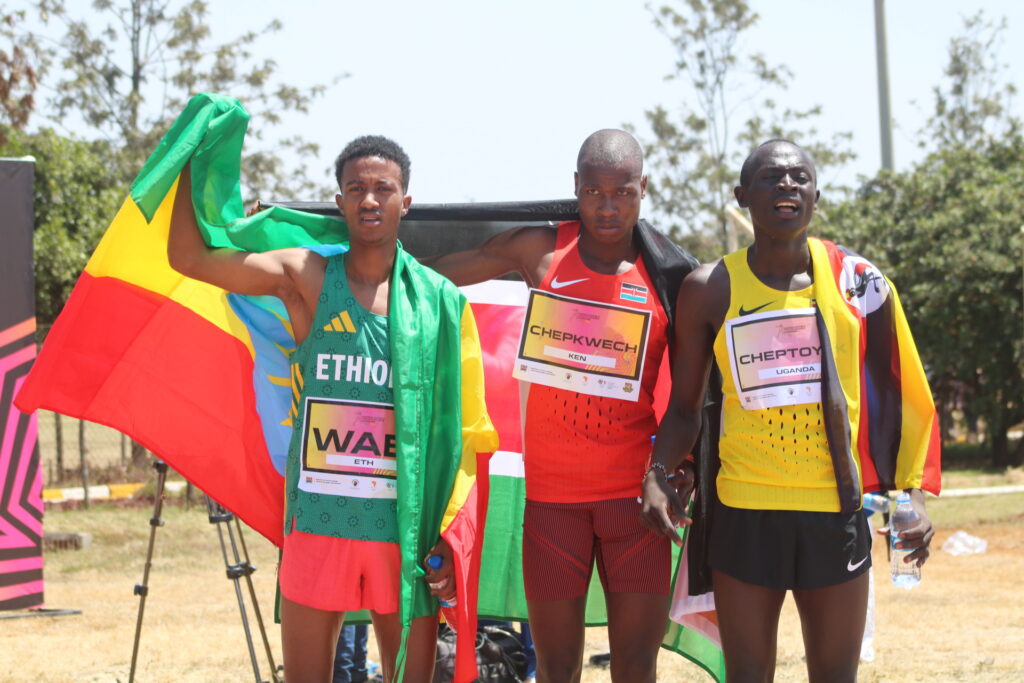
NAIROBI,Kenya Aug 26 2026 — Fresh from 1500m gold at the recent World Athletics Under-20 Championships in Oregon and another victory at the FEASSA East Africa School Games in Morogoro, Tanzania, Kenya’s Wilson Chepkwech added a third title on Wednesday, winning the men’s 1500m at the Association of National Olympics Committees of Africa (ANOCA) Zone V Youth Games.
Chepkwech clocked 3:46.81 at the Kenyatta University track, finishing ahead of Ethiopia’s Wabi Wejra Seblega in 3:52.83. Uganda’s Cheptoyek Timothy took bronze in 4:00.04.
The result renewed a familiar East African contest, with Kenya, Ethiopia and Uganda again occupying the leading positions in a middle-distance final.
But for Chepkwech, the gold was only part of the story.
“The winning at ANOCA means a lot to me. I have trained enough and will refine more as I target a good time.”
The conditions made the task harder.
“The weather was too harsh but we had to fight,” he said.
Rather than simply celebrate another title, Chepkwech is already looking for ways to improve. He plans to ask his coach at camp for more slope training, which he believes can sharpen his speed in the 1500m.
A rivalry with roots in Luanda
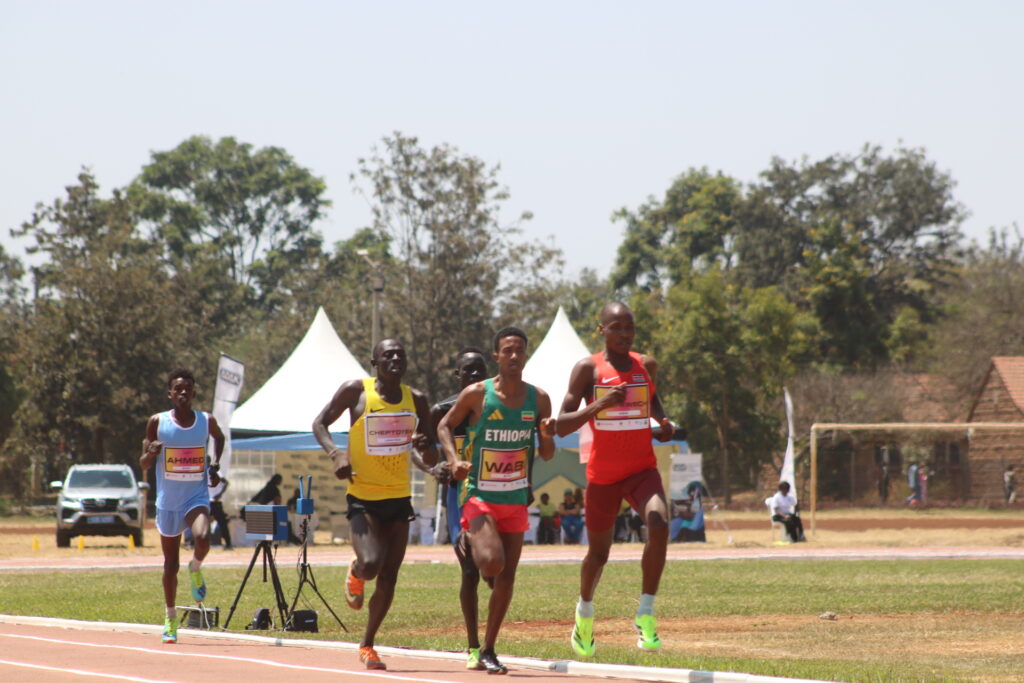
The battles in Nairobi come less than a year after the 2025 African Youth Games in Luanda, where East Africa’s emerging middle- and distance-running talent also shared the medals.
Kenya won the boys’ 1500m through David Kapaiko, while Caren Chepngeno took the girls’ 2000m steeplechase. Lonah Cherono added silver in the girls’ 3000m, while Wesley Kiplagat won silver in the boys’ 3000m.
Ethiopia also demonstrated its strength. Hika Regassa won the boys’ 800m, while Goytom Mekonen Kidane took bronze in the 3000m.
That backdrop makes Nairobi an intriguing test of whether Kenya can maintain its youth-level strength while Ethiopia and Uganda continue to produce athletes capable of challenging for the podium.
Chasala turns disappointment into gold
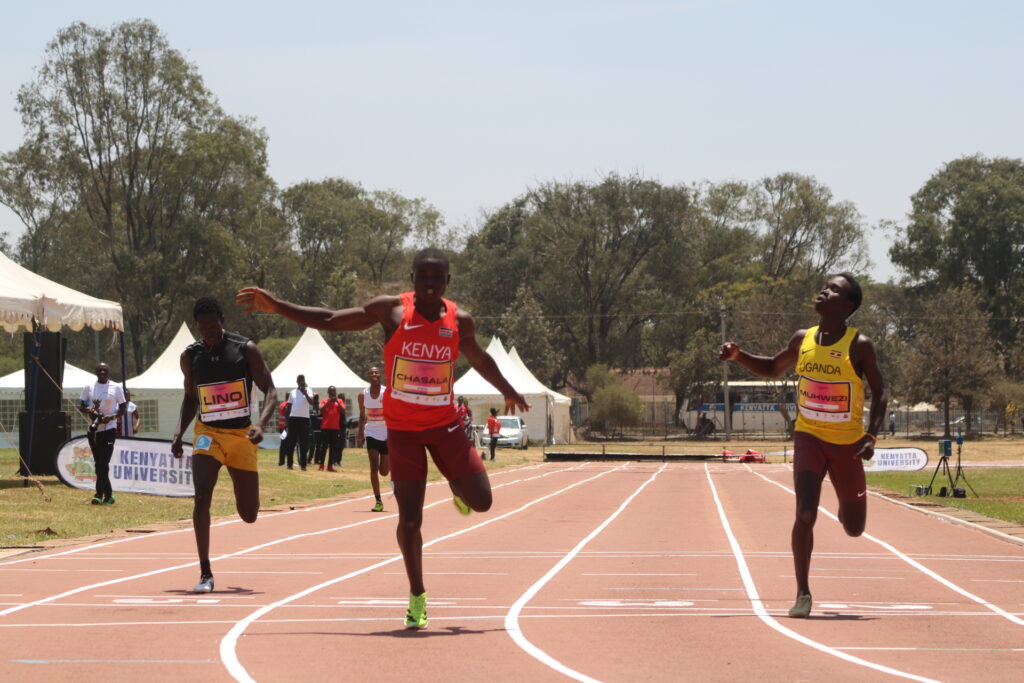
Kenya’s first athletics gold of the day came in the men’s 200m, where 16-year-old Bramwel Chasala clocked 22.43 seconds.
Uganda’s Muhwezi Abraham Lincoln was second in 22.66, with South Sudan’s Faisal Alafi Lino third in 22.98.
For Chasala, the victory represented persistence after a disappointment earlier in the season.
“I am happy to have won, and if I am made to be in Team Kenya to Dakar, I promise to deliver,” he said.
He had competed at Kenya’s trials for the World Under-20 Championships in Oregon but failed to achieve the qualifying time.
“I didn’t make the time, but that didn’t make me give up,” he said.
Now the ANOCA gold has given him another platform and a new target: earning a place on Kenya’s team for the Youth Olympic Games in Dakar, Senegal.
Ethiopia answers in the middle distance
Kenya did not have everything its own way.
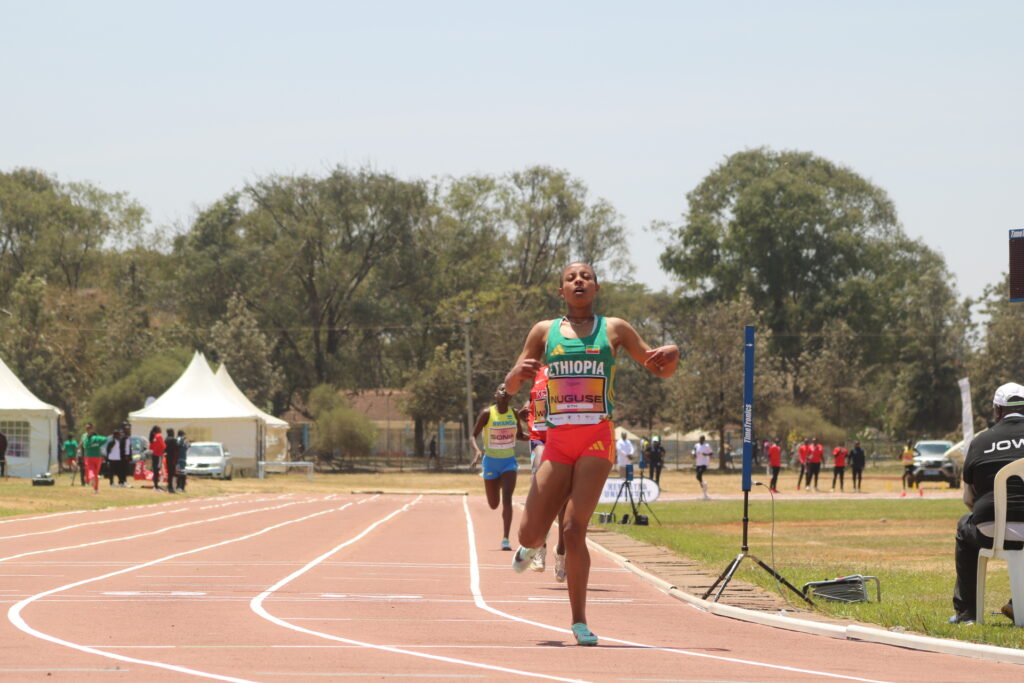
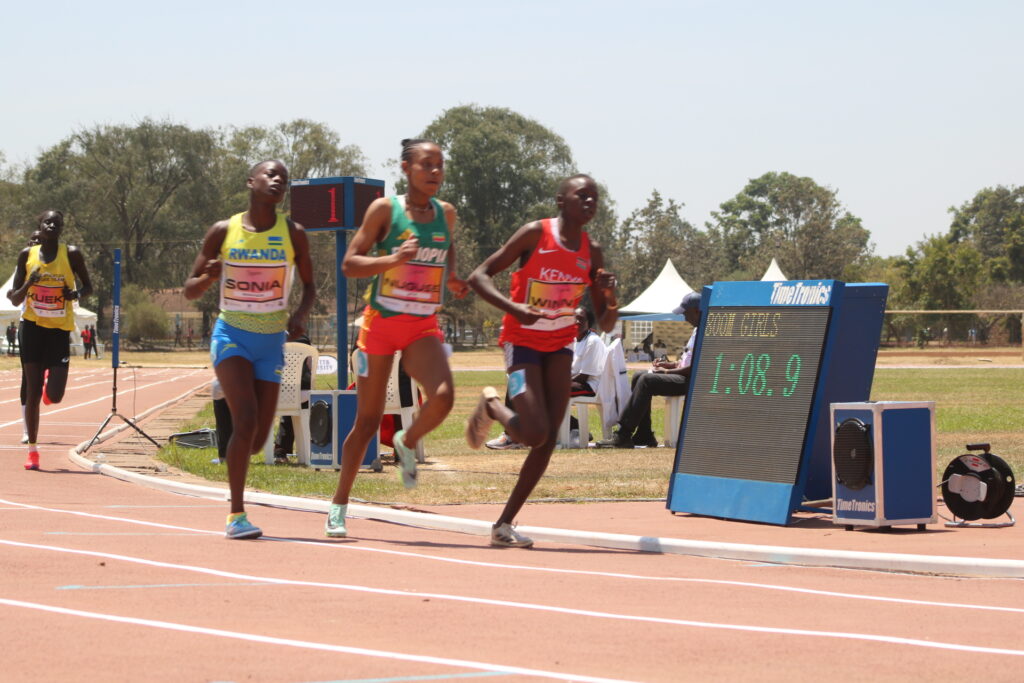
In the girls’ 800m, Ethiopia’s Nesanet Selmon won gold in 2:07.01, with Kenya’s Winnie Jepchumba taking silver in 2:09.11. Rwanda’s Abizera Sonia Eli-Elohe was third in 2:11.41.
Ethiopia struck again in the girls’ 3000m.
Yordanos Tsigab Berha won in 9:36.64, ahead of Uganda’s Chelimo Keren in 9:41.72. Kenya’s Tabitha Wanjiru Mwaniki was third in 9:42.30.
The Kenyan was only 0.58 seconds behind the Ugandan, with all three medalists separated by less than six seconds.
Cheptoyek looks beyond the podium
For Uganda’s Cheptoyek, the 1500m bronze was another step towards a larger ambition.
“The race was not easy,” he said, explaining that he had travelled straight from Morogoro after representing Uganda at the FEASSA Games.
He said Ugandan athletes regularly change their training bases and described Nairobi’s weather as extreme.
But his ambitions extend beyond ANOCA.
“My aim is to first go and represent my country in the upcoming Youth Olympics in Dakar, Senegal,” he said.
Cheptoyek also wants his own progress to benefit athletes back home. He hopes to work hard enough to help provide basic training equipment to fellow young athletes in Uganda.
It is a reminder that the competition is not simply about who wins medals. For many of these athletes, the Games are part of a longer journey towards senior international competition — and an opportunity to inspire those following behind them.
Kenya adds field-event gold
Kenya’s Purity Munyalo won the girls’ long jump with a best mark of 4.96m.
South Sudan’s Asumpta Philip was second at 4.36m, while Uganda’s Apiyo Michele took bronze with 4.34m.
In the girls’ 5000m walk, Ethiopia’s Neima Nuredin Juhar won a two-athlete race in 27:18.41. Kenya’s Cecilia Njeri finished second in 27:56.46.
By the end of the opening athletics day, Kenya had three gold medals, while Ethiopia had also claimed three victories. Uganda, Rwanda and South Sudan had each featured on the podium.
The medal count tells only part of the story.
Across the Kenyatta University track, young athletes are testing themselves against regional rivals, learning from difficult races and setting ambitions that stretch well beyond Nairobi.
For Chepkwech, it is another gold.
For Chasala, a response to disappointment.
For Cheptoyek, a step towards Dakar — and eventually, perhaps, an opportunity to help the next generation in Uganda.
The medals belong to today. The bigger prize is what these young athletes become tomorrow.