Last year’s Great Chepsaita men’s junior champion, whose 25:20 victory earned him a trip to the World Cross Country Championships in Florida, will miss the December 5 edition as he battles a persistent hamstring injury.
By Robert Kibet
“It pains me that I will not be competing at this year’s Great Chepsaita. I was looking forward to returning, but this injury has disrupted my preparations.”
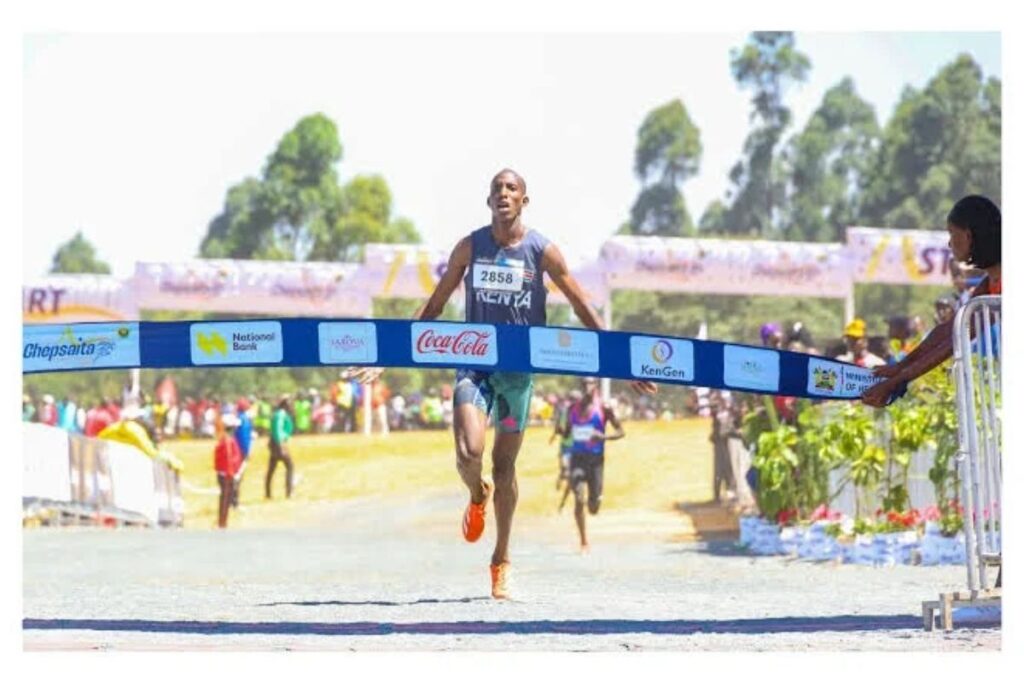
For 18-year-old Kelvin Kakenya Kariankei, the disappointment of missing the fourth edition of the Great Chepsaita Cross Country Run on December 5, 2026, goes beyond missing another race. It means stepping aside from the competition that gave him one of the most significant opportunities of his young athletics career.
Last year, Kariankei crossed the finish line in 25:20 to win the men’s junior category, a performance that earned him more than a podium finish. His victory opened the door to an international experience, taking him to Tallahassee, Florida, for the World Cross Country Championships in January 2026.
This time, however, the young Kenyan will be watching from the sidelines as another generation of junior athletes prepares to compete at Chepsaita.
A hamstring injury that has persisted for more than a month has disrupted his preparations, forcing him to abandon hopes of returning to defend his title.
From Chepsaita to the world stage
Kariankei’s breakthrough came through the Great Chepsaita Cross Country Run, where his victory carried a significant opportunity beyond the competition itself.
Race patron Sir Farouk Kibet had pledged that the winners of the men’s and women’s junior categories would travel with Team Kenya to the World Cross Country Championships.
Kariankei became one of the beneficiaries of that commitment, travelling to Tallahassee in January 2026.
For a young athlete developing within Kenya’s competitive running environment, such exposure represents an important step. It offers an opportunity to experience international athletics and understand the standards required to compete on a global stage.
His journey illustrates how youth competitions can become platforms for identifying talent and creating pathways for young runners to pursue ambitions beyond their local and national competitions.
When education meets athletic ambition
The injury setback has also highlighted the challenge young athletes face in balancing academic responsibilities with the demands of competitive sport.
According to Kariankei, he was supposed to maintain easy workouts and stretching as part of managing the hamstring problem. However, preparing for and sitting his Kenya Certificate of Secondary Education (KCSE) examinations interrupted his exercise routine.
“When I finished my examinations and returned to training, I strained the hamstring,” he explains.
For many young Kenyan athletes, secondary school represents an important stage in their development, requiring them to balance academic commitments with sporting ambitions.
Kariankei’s experience illustrates how interruptions to training routines can complicate an athlete’s return to competition, particularly when physical preparation has already been affected by injury.
His story also reinforces the importance of supporting young athletes as they navigate education, training and the physical demands of competitive athletics.
Iten becomes his recovery base
With his title defence no longer possible, Kariankei has shifted his attention towards recovery.
He is currently based in Iten, the renowned high-altitude training centre in Elgeyo-Marakwet County, where he is undergoing treatment and medication.
Although returning to his birthplace in Narok County would have been his preference, he has chosen to remain in Iten.
“I would have preferred to go back home to Narok, but I decided to remain in Iten because I can engage in light workouts as I undergo treatment. I am hoping for a speedy recovery,” he says.
Remaining in Iten allows him to stay connected to the training environment while receiving treatment. For now, however, his immediate priority is recovery rather than rushing back into competition.
A journey bigger than one race
As the December 5 competition approaches, a new group of junior athletes will arrive at Chepsaita hoping to make their mark.
For Kariankei, last year’s victory remains a reminder of what can happen when emerging talent is given an opportunity to shine. His journey from a 25:20 junior victory to the international stage demonstrates the value of creating meaningful opportunities for young athletes.
But his current experience also offers an important lesson for youth development: success in athletics is not measured by medals and international appearances alone.
It also involves education, physical wellbeing, appropriate support and the ability to navigate setbacks along the way.
Kariankei will not be defending his crown this year, but his journey is far from over. His immediate ambition is to recover and return to competition when ready.
Chepsaita gave him an opportunity to experience the world stage. The next chapter of his journey will be about rebuilding towards it.